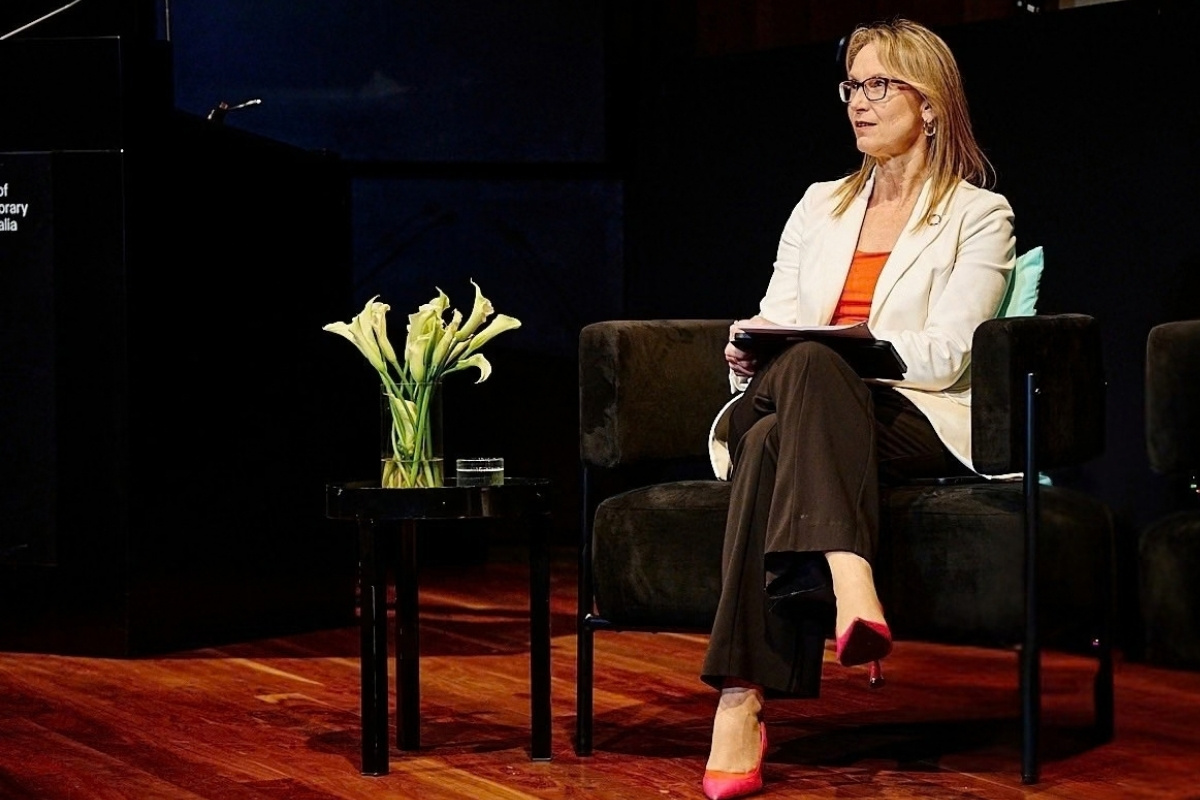
Seamless CEO Ainsley Simpson unpacks three significant policy signals Australia has received in recent days. Together, they show that circularity is becoming an economic, productivity and resilience imperative.
The release of the 2026 Intergenerational Report, agreement on a new Circular Economy Roadmap by Australia’s Environment Ministers, and the NSW Government’s move to introduce mandatory product stewardship for solar panels, collectively send a clear and consistent signal: Australia must use materials more efficiently, retain their value for longer and build more resilient domestic supply chains.
Preparing for a more productive, resilient future
Released this week, the 2026 Intergenerational Report is the Australian Government’s long-term assessment of the economy, federal budget and sustainability of current policy settings. Looking ahead 40 years, it identifies the structural changes that will shape Australia’s prosperity.
The report identifies five major transitions: artificial intelligence, geopolitical fragmentation, the energy transition, an ageing population and growing care economy, and the transformation of Australia’s industrial base. It also places renewed emphasis on intergenerational equity.
Productivity and resilience feature strongly across these transitions. With population and workforce growth constrained, improving living standards will increasingly depend on getting more value from the resources, skills, infrastructure and materials we already have. At the same time, geopolitical uncertainty and disruption to global supply chains are making sovereign capability and economic resilience increasingly important.
The report projects annual long-term labour-productivity growth of 1.2 per cent, supported by innovation, investment, skills and regulatory reform.
This is where the circular economy becomes especially relevant.
Circularity is productivity policy
The Productivity Commission’s inquiry report, Australia’s circular economy: unlocking the opportunities, connects circularity with the broader economic challenges identified in the Intergenerational Report.
The Commission found that better product design, reuse, repair, remanufacturing and recycling can reduce material inputs and waste management costs while delivering economic, environmental and social benefits.
Its recommendations focus on streamlining and harmonising regulation, strengthening product stewardship obligations, and supporting coordination, innovation and investment. It also called for nationally coordinated regulation, stronger product stewardship and greater transparency and accountability in textile stewardship.
These findings reinforce the Intergenerational Report’s central message. Productivity is not only about technology or producing more with fewer people. It is also about getting more value from the resources we already have, retaining their economic value within Australia and reducing exposure to supply disruptions and volatile global markets.
Turning circular ambition into national action
The new Circular Economy Roadmap, agreed by Commonwealth, State and Territory Environment Ministers last week, translates these principles into a national direction. Its goal is to double Australia’s circularity by 2035 and lift productivity by designing out waste, recovering more materials and building resilient domestic supply chains.
The roadmap identifies four areas for collective action:
1. Product stewardship: making producers responsible for better design and recovery.
2. Infrastructure: building capacity to collect, sort, reuse, repair and remanufacture.
3. Markets: using procurement and standards to create demand for recycled materials.
4. Harmonisation: aligning rules so businesses can invest with confidence.
Significantly, it adopts a whole-of-life approach, considering how products are designed, used, reused or repaired, and how their materials can be recovered.
It also recognises that isolated state based systems cannot efficiently manage products sold through national and global supply chains. National consistency and harmonised regulation are essential to reduce duplication, provide investment certainty and create markets at sufficient scale.
Importantly, the roadmap identifies procurement and standards as tools for creating demand for recycled materials. Without reliable end markets, collecting and processing more material will not produce a functioning circular economy.
The roadmap is welcome and echoes the findings and recommendations of our Evidence for Change report.
NSW leads with immediate action
The NSW Government has responded with immediate action, opening consultation on Australia’s first mandatory solar panel product stewardship scheme.
The proposed scheme will require solar panel brand owners to take responsibility for end-of-life management and contribute to collection, recycling and resource recovery. It follows NSW’s mandatory approach to batteries and is intended to support nationally consistent arrangements.
This is an important example of government enabling product stewardship in practice: establishing clear accountability for brands producing products with challenging end-of-life pathways, while creating the conditions to recover valuable materials, build new supply chains and support investment, manufacturing capability and skilled employment. NSW generates approximately 14,000 tonnes of solar panel waste each year.
The same principles apply to clothing, with 220,000 tonnes of clothing textiles landfilled in Australia each year. Product stewardship can help keep these materials in use and build a more circular economy.
Making clothing part of the circular economy
Australians purchase around 1.5 billion new items of clothing each year, while approximately 220,000 tonnes are sent to Australian landfill. The costs are carried disproportionately by councils, charities, households and responsible businesses, while many companies take little responsibility for the products they place on the Australian market.
Seamless has been calling on the Australian Government to set a target now to introduce mandatory, nationally coordinated clothing stewardship by 2029, with a clear pathway to achieve it.
The direction now established by government supports the essential elements of that call:
- Nationally consistent mandatory product stewardship
- Producer responsibility across the full life of clothing
- Incentives for circular design, reuse and repair
- Harmonised data, measurement and reporting
- Investment certainty for collection, sorting, reuse and recycling infrastructure; and
- Demand-led procurement for Australian recycled textile content.
Together, these measures can create the conditions for a more circular clothing economy.
And the benefits extend across the economy. Responsible clothing businesses gain a level playing field and greater certainty. Recyclers, manufacturers and innovators gain reliable material supply and demand for Australian recycled content. Charities and councils face lower costs, while consumers gain better opportunities to choose, enjoy and recirculate clothing responsibly.
Australia can turn clothing waste into productive resources, create new business opportunities and jobs, strengthen domestic capability and build a more resilient clothing economy for current and future generations.
The policy direction is clear. The next step is to apply it to clothing. Seamless stands ready to work with governments, retailers, service providers and communities to turn this shared ambition into practical action.


.jpg)