Australia’s clothing waste problem also presents an opportunity for change. We can reduce textile waste, keep valuable materials in use, create new business opportunities and jobs, and build a more circular clothing economy. But we need the right settings and a coordinated system to make it happen.
Seamless is calling on the Australian Government to set a target now to introduce mandatory, nationally coordinated clothing stewardship by 2029. This is a practical step towards a more circular clothing sector and a more productive Australian economy.
The cost of clothing waste
Australians buy 1.51 billion new clothing items every year, which equates to 55 items per person, second only to the US on a per-capita basis. The Australian clothing value chain generates 14.5 million tonnes of greenhouse gas emissions each year. Only a small proportion of textiles are recycled domestically, while 220,000 tonnes of clothing textiles end up in Australian landfill annually.
And the cost isn’t just environmental.
Australia spends around $17 billion a year managing product waste, while the cost of clothing disposal falls heavily on councils, charities and households.
Our fragmented state-based approach and policy uncertainty are also holding back investment and productivity. Australian Retail Council modelling suggests fragmented regulation could reduce national GDP by $26 billion over the next decade and add more than $9 billion to household costs.
Turning waste into value
A more circular economy can change this.
CSIRO modelling that informs Australia’s Circular Economy Framework shows that doubling circularity by 2035 could add $26 billion a year to GDP, divert 26 million tonnes of waste from landfill annually and reduce greenhouse gas emissions by up to 14%.
For clothing, this means keeping valuable materials in use for longer, growing Australian recycling and remanufacturing, creating jobs, attracting investment and building more resilient supply chains.
As Minister Watt has said, “The circular economy transition is not a niche environmental project for people in our inner cities. It’s fundamental to securing a sustainable future.” He has also described it as “practical economic productivity reform.”
The opportunity is clear. The solution is building the system to capture it.
Why voluntary action isn’t enough
Australia already has Seamless, a voluntary clothing stewardship scheme. As a stewardship scheme, it’s based on a central idea: brands that put clothing on the Australian market should take responsibility for the entire life of their garments - from design and production through to reuse, recycling and end of life.
Many other industries already manage for end of life in Australia, from mobile phones, printer cartridges, plastics, containers and mattresses through to tyres, batteries and oil. Seamless is Australia’s stewardship scheme for clothing.
Seamless members make a voluntary contribution of up to 4 cents for every new garment they procure for the Australian market. These pooled contributions fund four Seamless priorities: designing clothes that last longer and can be recycled; supporting circular business models such as repair and resale; increasing the collection, sorting and recycling of clothing textiles; and helping Australians choose, enjoy and recirculate their clothes more purposefully.
But voluntary participation can only go so far.
There are 58 responsible clothing producers who are members of Seamless, while around 14,000 producers are trading in Australia. The cost of managing clothing waste falls largely on councils, charities and households, while investment in, and demand for, Australian recycled textiles are limited.
According to our Evidence for change report, a voluntary scheme cannot fully address free-riding, fragmented systems and inconsistent reporting. It also cannot deliver the national coordination needed to build a system that works across the entire clothing value chain and for every Australian.
More than 80 countries have established mandatory extended producer responsibility (EPR) (also known as product stewardship) frameworks, including 28 regulated schemes for clothing and textiles. Australia has not.
A practical opportunity for government
The Australian Government has an opportunity to change this.
Seamless is calling on the Australian Government to set a target now to introduce mandatory, nationally coordinated clothing stewardship by 2029, with a clear pathway to achieve it.
Mandatory stewardship would create a level playing field and industry-wide accountability. It would provide greater certainty for investment, support the development of next markets for recycled clothing, create jobs, reduce landfill and keep valuable textiles in productive use for longer.
Most importantly, it would help shift clothing from a waste problem to an opportunity for positive outcomes.
Join the call for mandatory clothing stewardship
Seamless is calling on the Australian Government to set a target now to introduce mandatory, nationally coordinated clothing stewardship by 2029.
Join us and help amplify the call for action.
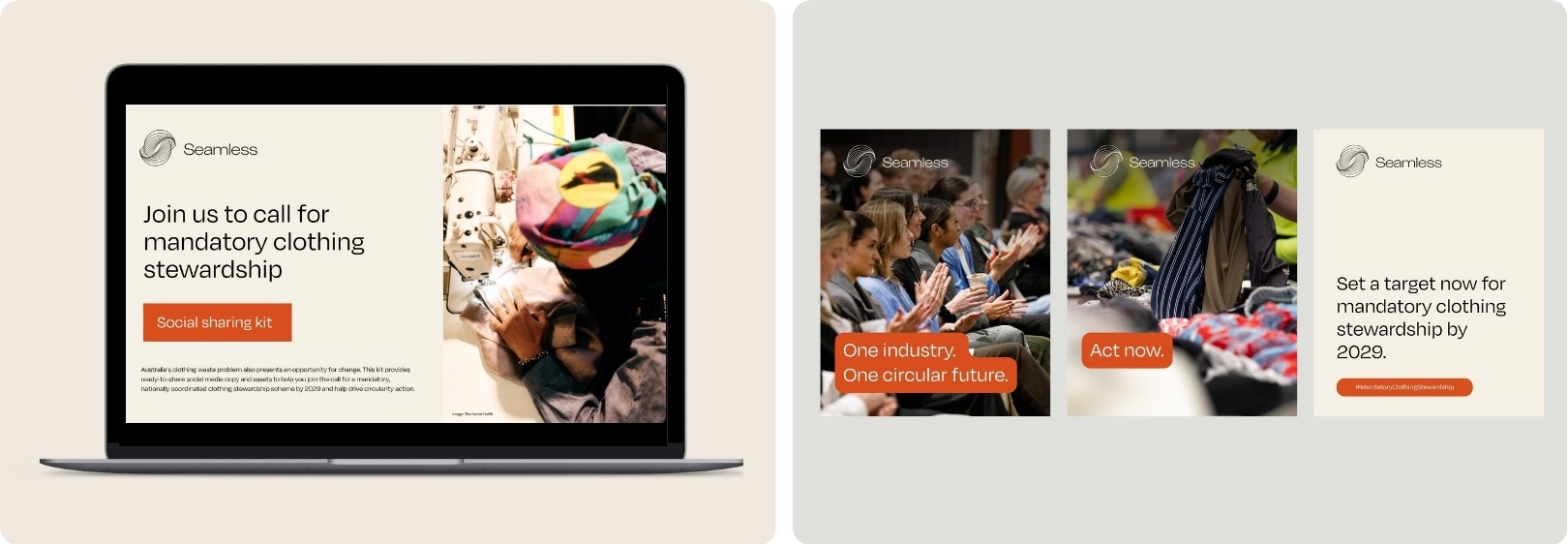
We’ve created a social sharing kit with suggested social media copy and ready-to-use assets. Adapt the copy and images to suit your audience and add your own perspective.
Every post helps demonstrate that industry is ready to work with government to deliver a more circular, productive and resilient clothing sector.

.jpg)