About us

About us
Seamless is Australia’s national clothing stewardship scheme and the world’s first circular product stewardship scheme, created to divert clothing from landfill and help build a circular clothing economy.
Our four priorities

Circular clothing design
Offering training, resources and practical guidance to help clothing producers design clothes that are more durable and recyclable.

Circular business models
Supporting and piloting models such as clothing rental, resale and repair to help clothes stay in use for as long as possible.

Closing the loop
Collaborating with clothing producers and industry to ensure that we effectively collect, sort, reuse and recycle our clothes.

Education
Helping Australians choose clothes more purposefully, enjoy them for longer and reuse or recycle them with care.
Our leadership team
With extensive experience in policy, transformation, marketing and industry leadership, our team is united by a commitment to collaboration, innovation and positive change. Our leadership team is supported by Paige Street, Program Coordinator for Industry Transformation and Sandy Stogiannou, Program Administrator.
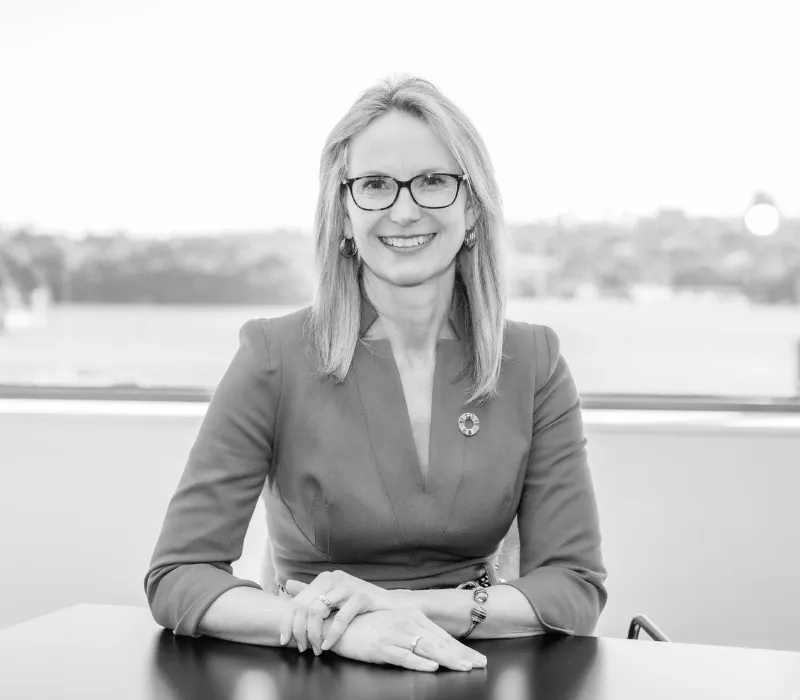
Ainsley Simpson
Chief Executive Officer
With over two decades of leadership experience, Ainsley has built a reputation for shaping policy, driving industry reform, and building collaborative partnerships.

Danielle Kent
General Manager, Industry Transformation
Danielle led the design and establishment of Seamless and has extensive experience in strategy, complex change management and system transformation.

Karen Thomas
General Manager, Membership & Marketing
Karen is an experienced strategic marketing and membership leader known for building brands, enhancing experiences and driving positive change.
Board of directors
The Seamless Board of Directors brings together leaders from across Australia's clothing industry. This includes up to seven Elected Directors who are nominated representatives from Seamless member organisations, and up to six Appointed Directors which includes three Independent Directors including the Independent Chair and a representative from the Australian Fashion Council.
Appointed Directors:
Kylie Hargreaves
Independent Chair
Marianne Perkovic
Australian Fashion Council Chair
(Australian Fashion Council representative)
Matt Davis
Independent Director
Rosanna Iacono
Independent Director
Elected Directors:
Frances Blundell
KMD Brands Limited
Peri-Jane Crosbie
Internet Services Australia 1 Pty Ltd
trading as THE ICONIC
Anna Fowler
Lorna Jane Pty Ltd
Rebecca Hard
ARJ Group Holdings Pty Ltd trading as The Sussan Group
Angela Winkle
R.M. Williams Pty Ltd
Clothing Stewardship Australia Constitution
The Constitution for Clothing Stewardship Australia Limited explains how the company is internally managed. It outlines the rules for dispute resolution, general meetings, voting, directors’ duties and more.
FAQs
Seamless is Australia’s clothing stewardship scheme and the world’s first circular product stewardship scheme, created to divert clothing from landfill and build a circular clothing economy.
As a clothing stewardship scheme, it’s based on a core principle: producers that put clothes on the market should take responsibility for the entire life of their garments - from design, through to reuse, recycling and end of life. Many stewardship schemes already operate in Australia, covering products such as mobile phones, printer cartridges, plastics, containers, mattresses, tyres, batteries and oil.
Seamless works with clothing producers and industry stakeholders to help people choose, enjoy and recycle their clothes more responsibly. We are building a national clothing system that is easy to understand, convenient and accessible for all Australians.
In 2024, the Australian clothing industry manufactured and imported over 1.5 billion units of new clothing. That's equivalent to 55 items of clothing for every Australian, and most is made from non-renewable and environmentally problematic materials.
More than half of this clothing ends up in landfill in Australia, which amounts to 220,000 tonnes per year. The carbon footprint of clothing in Australia in 2024 is estimated to be 14.3 million tonnes per year. It’s also costing charities millions of dollars to sort through donations and dispose of unsaleable and unwearable items.
Systematic and transformational change is needed and this can only be achieved through industry collaboration across the entire clothing lifecycle.
Seamless takes a stewardship approach, which recognises that the clothing producers who place clothes on the market are responsible for the entire life of that garment, from design through to recycling or sustainable disposal.
Seamless is funded by a 4 cent per garment levy paid by ‘stewards’ who are the clothing producers who become members of the scheme. This contribution is reduced to 3 cents for every garment that meets the eco-modulation criteria. These funds are invested in four priority areas:
- Circular design: incentivising clothing design that is more durable, repairable, sustainable and recyclable
- Circular business models: fostering new models for reuse, repair, rental, and services that prolong clothing life
- Closing the materials loop: expanding clothing collection and sorting practices for effective reuse and recycling
- Citizen behaviour change: encouraging changed practices around clothing acquisition, use, care, and disposal
The recommendation is to allocate 75% of total funds raised to collecting, sorting and recycling clothing. This includes research and development into new recycling technology to develop a national system at scale, in partnership with the recycling industry.
Currently, the majority of the clothing industry in Australia follows a linear model, of take, make and dispose. Clothing circularity will be achieved when we start to value the investment in our clothes through how we choose, wear, share and care for our clothes. The clothing lifecycle then becomes circular, and follows a reduce, reuse, recycle model.
Our mission is to work collaboratively with every clothing producer, as well as government and the wider industry on the transformation towards a circular clothing economy in Australia. This will not only create exciting new business and employment opportunities, but it will prioritise nature by ensuring we significantly reduce the 888 million items of clothes (222,000 tonnes) of clothing we send to landfill in Australia each year – that’s the equivalent of 44,400 adult African elephants!
Clothing Stewardship Australia Ltd is known as Seamless. It was established by the Transition Advisory Group (TAG) with support and guidance from the Product Stewardship Centre of Excellence.
Members of the TAG included Seamless foundation members BIG W, David Jones, Cotton On, Lorna Jane, Rip Curl, R.M. Williams, the Sussan Group and THE ICONIC. Members also include the NSW Environment Protection Authority (EPA) and clothing industry representatives A.BCH, bassike, the Future Fashion Agency and the Australian Fashion Council, as well as supply chain specialists, Charitable Reuse Australia and the Waste Management and Resource Recovery Association.
The work of the TAG was funded by the Seamless foundation members and the NSW EPA.
The foundation members of Seamless are some of Australia’s largest and most iconic clothing brands and retailers. They are BIG W, Cotton On, David Jones, Lorna Jane, Rip Curl, R.M. Williams, the Sussan Group and THE ICONIC.
The Seamless Board of Directors has up to 13 Directors. This includes up to seven Elected Directors who are nominated representatives from Seamless member organisations, and up to six Appointed Directors which includes three Independent Directors including the Independent Chair, a representative from the Australian Fashion Council, a representative from a Seamless supporter and one other Appointed Director which may be a Guardian of Nature, or another Seamless supporter or Independent Director. The current Directors are:
Appointed Directors:
- Kylie Hargreaves, Independent Chair
- Marianne Perkovic, Australian Fashion Council Chair (Australian Fashion Council representative)
- Matt Davis, Independent Director
- Rosanna Iacono, Independent Director
Elected Directors:
- Frances Blundell, KMD Brands Limited
- Peri-Jane Crosbie, Internet Services Australia 1 Pty Ltd trading as THE ICONIC
- Anna Fowler, Lorna Jane Pty Ltd
- Rebecca Hard, ARJ Group Holdings Pty Ltd trading as The Sussan Group
- Angela Winkle, R.M. Williams Pty Ltd
No. Seamless, is an independent, not for profit organisation registered as Clothing Stewardship Australia Ltd.
While the Seamless scheme design was created by a consortium led by the Australian Fashion Council with Charitable Reuse Australia, Queensland University of Technology, Sustainable Resource Use and WRAP UK, Seamless is not operated by the Australian Fashion Council.
A product stewardship scheme recognises that the businesses who place products on the market are responsible for the entire life of that product - from design, through to reuse, recycling and end of life. Many stewardship schemes already operate in Australia, covering products such as mobile phones, printer cartridges, plastics, containers, mattresses, tyres, batteries and oil.
Mandatory, producer-funded stewardship schemes with strong governance and transparency are increasingly being adopted worldwide.
In the European Union, extended producer responsibility (EPR) schemes are prioritised based on impact, system maturity and political readiness, with policy frameworks focused on key product streams such as packaging, electronics, batteries, vehicles and textiles. In the United States, textile EPR is advancing at the state level, with California introducing the first mandatory scheme and New York and Washington considering similar approaches. Chile and Kenya are also progressing mandatory textile stewardship schemes.
While scheme design varies, most include mandatory producer obligations and levies, with funding combined to support clothing collection, sorting and pre-processing, alongside complementary measures such as eco-design standards, reuse and repair requirements, product bans, and resource levies.