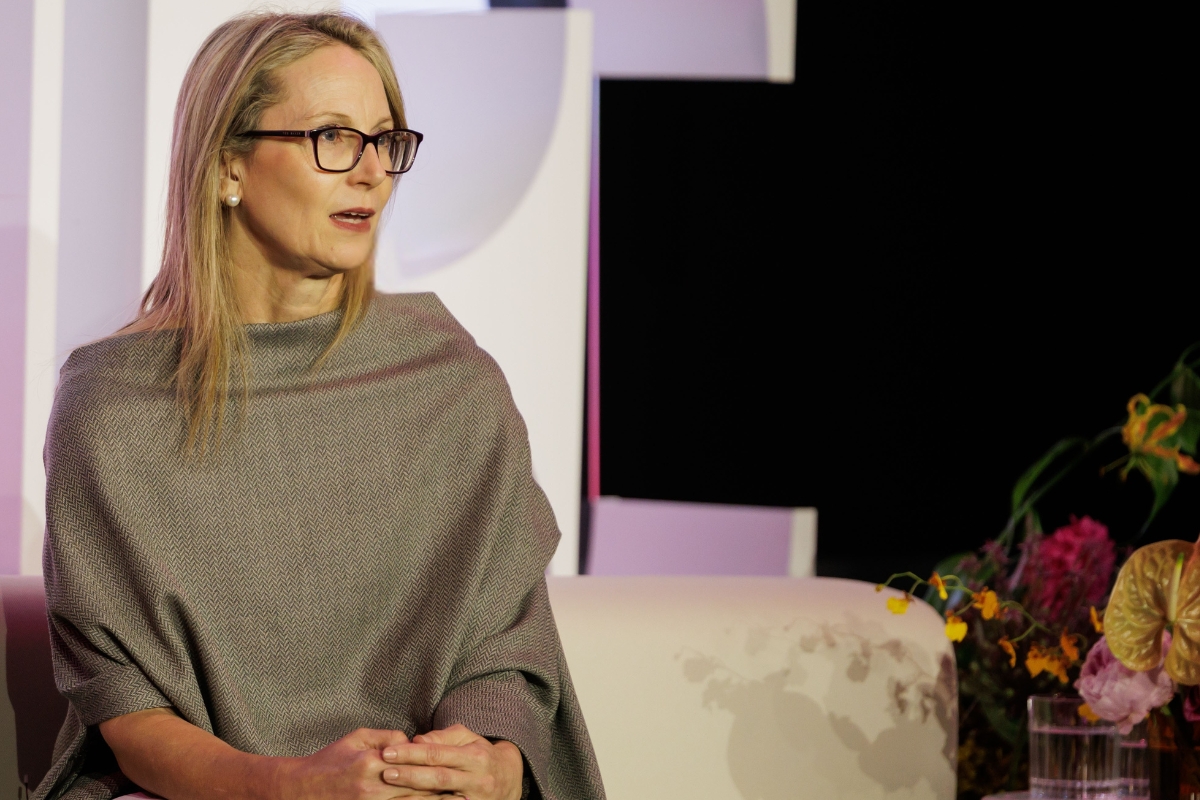
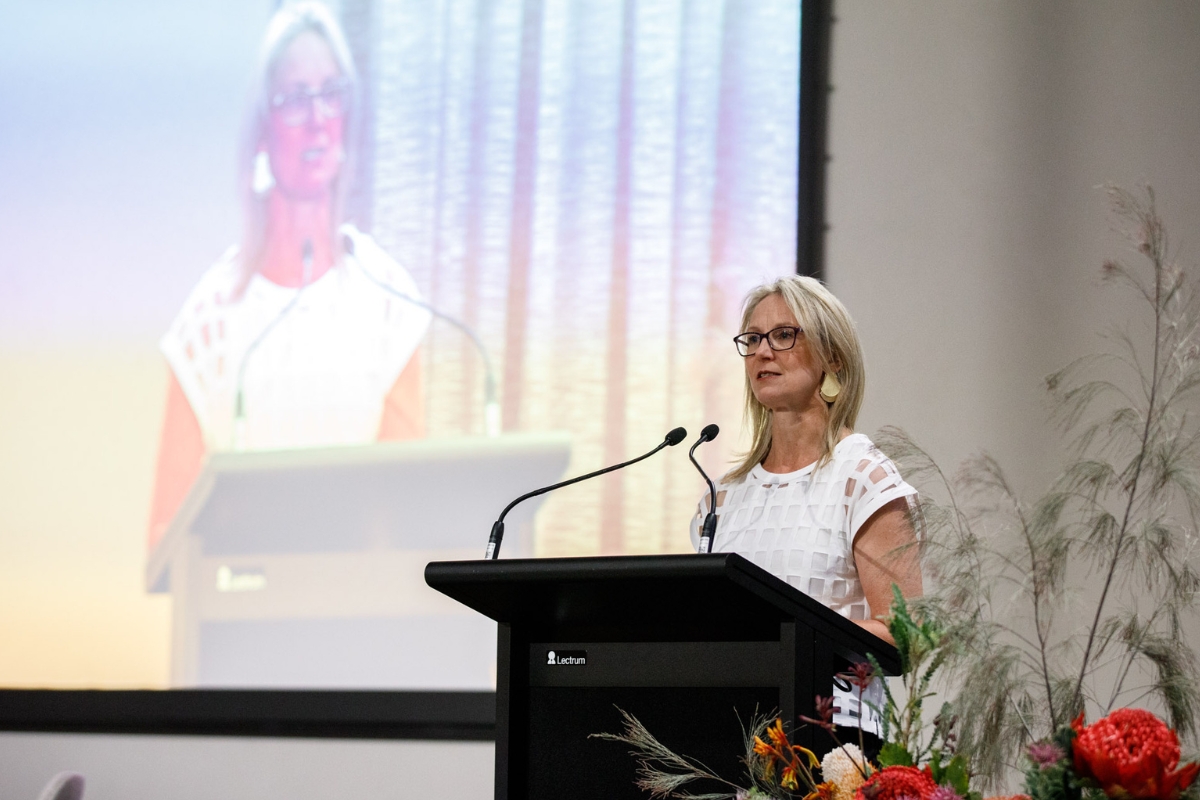
As Seamless enters its third year, our CEO Ainsley Simpson explains why we’re stepping up our advocacy for regulated clothing stewardship, what is needed to create a level playing field, and why your voices will be critical to driving change.
Transforming a traditionally linear clothing industry into a thriving, circular one is no mean feat, and one we can only achieve together. We share your ambition to see the transition advance more quickly, and at times, the frustration about the pace of change.
In our first two years of operation, Seamless has laid important foundations for change. We have raised the benchmark through circular design training, which is available to all Seamless member brands. This year, we have also made the training available to clothing producers that are not yet members, at an accessible price.
We have commenced new partnerships to demonstrate practical solutions and deliver outcomes that can be replicated across the industry. This work recognises that businesses need access to knowledge, capability and proven models if circularity is to become part of everyday practice.
We are doing this because, while the biggest actors walk past circularity, we cannot. We must provide every opportunity for our industry to do better.
The evidence for change
As part of a program that received grant funding from the Australian Government, Seamless completed a significant program of trials, research and economic analysis, which delivered the Evidence for Change. The findings highlight four critical gaps in Australia’s current clothing system, echoing many of the concerns the industry has raised with me:
1. There is no nationally coordinated system for collecting, sorting and recycling unwearable clothing.
2. Next markets for recycled clothing textiles remain underdeveloped.
3. There is no consistent national data framework for tracking clothing from production through to end-of-life, and
4. The absence of a clear regulatory pathway enables free-riding and constrains investment in recycling capability.
Making the case for regulation
Clothing has been listed as a priority product on the Environment Ministers Priority List since 2021. In June 2023, at an event to mark the commencement of Seamless operations, the Australian Government made it clear that industry-wide action and participation were expected and that regulation would occur if industry did not step up.
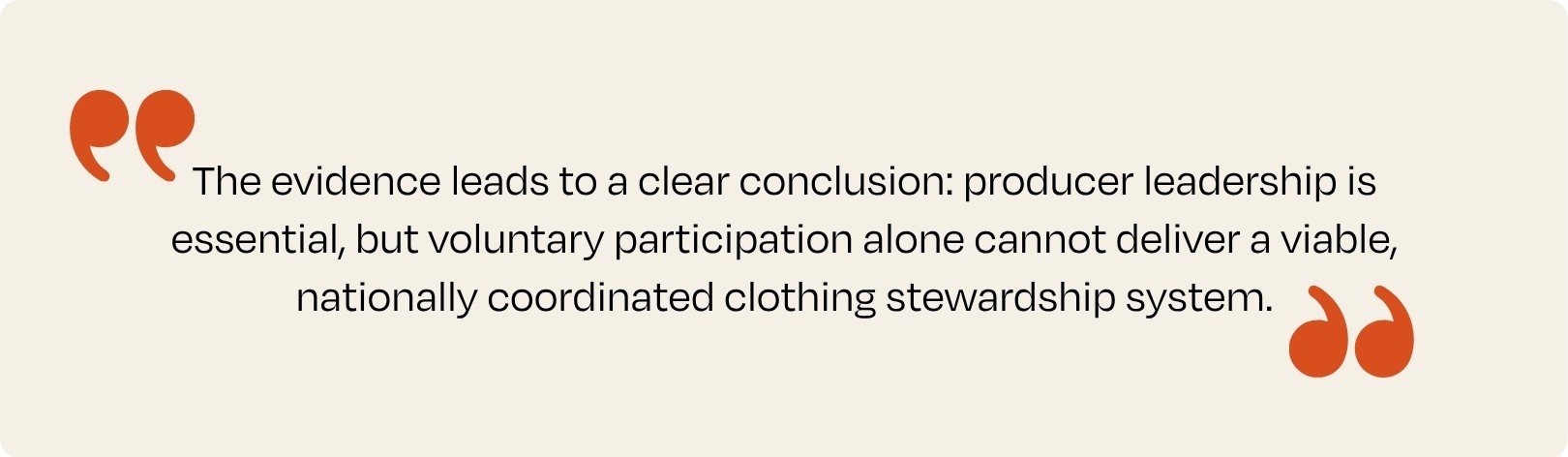
Following the delivery of the Evidence for Change, we have significantly increased our advocacy for a mandatory, nationally coordinated clothing stewardship scheme.
A regulated mandatory scheme will establish consistent accountability across the market and a commercial reason for clothing producers to design out waste. This is because a mandatory stewardship scheme links contributions to the volume of clothing placed on the Australian market while rewarding continuous improvement. Businesses placing the greatest quantities of clothing onto the market will make the greatest contribution, while lower-volume businesses contribute proportionately.
Post-regulation, Seamless is proposing that all voluntary member contributions are recognised through an early-adopter levy credit. This will help create a more equitable scheme and provide further incentive for responsible businesses to join now to help shape a scheme that is effective, proportionate and practical to administer.
Seamless also supports the work of peak bodies advocating for international e-commerce platforms to meet the same economic responsibilities and consumer standards as Australian businesses, with effective enforcement on non-compliance.
Turning certainty into investment
Regulation will create a level playing field, strengthen accountability and ensure the cost of clothing waste is shared fairly. These costs already exist and are currently borne by charities, local governments, recyclers and, ultimately, consumers and taxpayers.
By establishing shared responsibility and long-term certainty, regulation will also help unlock investment in the infrastructure needed for a circular system. This includes collection, sorting, recycling and remanufacturing capability, supported by sustained demand for the recycled materials produced.
For this investment to be well directed, it must be underpinned by clear, coordinated national data. Greater transparency about what clothing is placed on the Australian market, where it goes and how much is reused, recycled or sent to landfill, would inform investment and complementary reforms, including product standards, government procurement policy and recycled content targets.
We need your voice
We value your feedback and the challenge to do more.
This next phase will require the full force of our Seamless members and supporters and the broader clothing industry. We need you alongside us as we advocate for the policy settings that will make the greatest difference.
In the coming weeks, we’ll be sharing a communications kit including social media copy and assets to help you show your support for a mandatory clothing stewardship scheme - so keep an eye on your inbox.
Together, we can create the change needed to build a more circular clothing industry in Australia.
Photography credit: Lucas Jarvis / Eventive Photography

.jpg)