The Seamless Circular Clothing Textiles Fund is supporting practical projects that keep clothes out of landfill and in use for longer. One of them is the WA Clothing Recovery Pilot, led by Good Sammy. It brought organisations across Western Australia together to trial a local system for collecting, sorting and reusing clothing, diverting 11 tonnes from landfill in just three months.
The project explained
Good Sammy Enterprises (Good Sammy) is a not-for-profit organisation that creates jobs and training opportunities for people with disability. Each year, the team processes more than five million kilograms of donated goods, most of which are reused or recycled, with some transformed into new products. The goal is simple: reduce what goes to landfill and get more value from the things we no longer need.
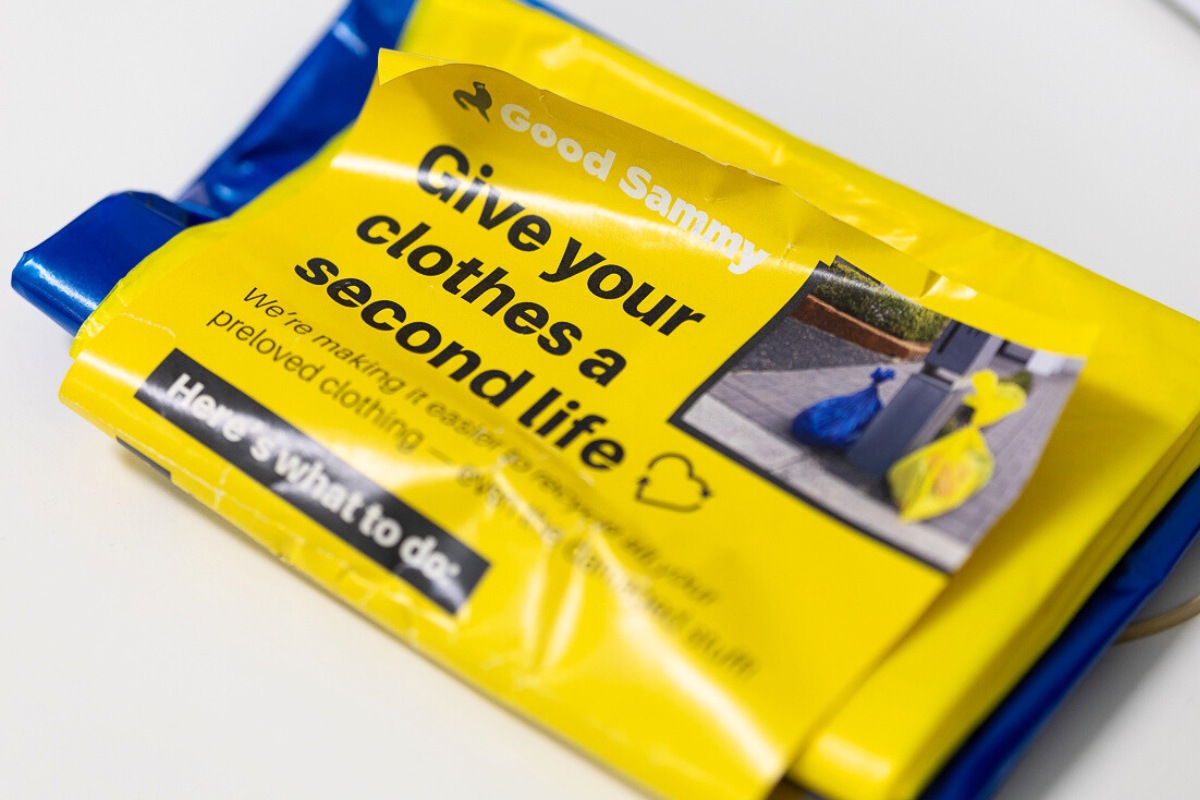
The WA Clothing Recovery Pilot collaborated with local organisations across Western Australia (WA) including the City of Kwinana and the City of Vincent to trial a new approach to clothing collection. Over three months, more than 3,000 households donated over 11 tonnes of clothing.
Residents were asked to sort their donations into two categories: items that could be worn again and those that couldn’t. All items were then sorted at Good Sammy’s Perth facility, supporting local jobs for people with disability.
Clothing in good condition was resold through Good Sammy's network of op shops, helping fund their community programs. Items that couldn’t be worn again were sent to ThreadUp Australia, along with decommissioned uniforms from Stewart & Heaton, where they were turned into fibres used to make acoustic insulation for buildings.
Other materials were also recovered. Zips removed from garments were refurbished by To the Power of You and prepared for resale.
By bringing together partners within Western Australia, the project created a clear pathway for collecting, sorting, reusing and recycling clothing locally, keeping it out of landfill and in use for longer.
The power of partnership
Good Sammy led the WA Clothing Recovery Pilot, managing the collection, sorting, garment disassembly and analysis of the clothing. They collaborated with five local organisations.
The City of Kwinana is a fast-growing local government area south of Perth, Western Australia. The City of Vincent is a local government area in inner metropolitan Perth. Both councils supported the project by running kerbside collections in their communities, making it easy for residents to take part.
Stewart & Heaton is a family-owned Australian manufacturer of protective apparel and uniforms. They contributed decommissioned uniforms, helping explore how workwear can be better managed at the end of its life.
To the Power of You supports ethical and circular clothing through Slow Fashion Hubs offering shared resources, education and community engagement. They focused on recovering and refurbishing zips removed from unwearable garments, giving these components a second life.
ThreadUp Australia is a textile recycling company based in Western Australia that operates the state’s first mechanical, waterless and chemical-free fibre opening facility. They processed the unwearable clothing, turning it into recycled fibres that were used to create acoustic insulation products.
Together, these organisations created a local, practical solution for clothing that can’t be worn again.
Project highlights
In just three months, the WA Clothing Recovery Pilot diverted more than 11 tonnes of clothing from landfill.
Community participation was a standout. Nearly 22% of households took part, more than double the typical participation rate for previous clothing collections.
The simple approach of asking people to separate wearable and unwearable clothing proved effective and easy to follow.
Another highlight is the data collected. By analysing thousands of items and comparing the results with more than two years of Good Sammy's own historical data, the project is building a clearer picture of what happens to clothing at the end of its life.
This information will help improve how clothing is collected, sorted and recycled in the future, to inform a national coordinated clothing system for all Australians.
Response from local communities
The response from the community has been overwhelmingly positive.
Residents embraced the simple sorting process, and participation rates were significantly higher than usual clothing kerbside collections. Feedback from both councils showed strong support for the trial, with many seeing value in separating clothing at the point of donation.
There is clear interest in expanding this approach across more areas in the future.
What we learnt
The WA Clothing Recovery Pilot confirmed that most donated clothing can still be worn again, with nearly 80% suitable for resale.
For the items that couldn’t be reused, the main issues were heavy staining and worn-out elastic. Less than 1% of these garments were suitable for repair.
Compared with typical donations, unwearable items include higher proportions of children’s clothing, menswear and undergarments. More durable items, such as jeans and winter clothing, were less common in the unwearable category.
Uniforms and branded workwear presented a unique challenge. 3% of unwearable clothing were uniforms and branded clothing. While 70% were still in good condition, the presence of logos and personalisation meant they couldn’t be reused.
Overall, the findings provide valuable insights into how clothing can move through a local system, from donation to reuse or recycling. These learnings will help shape better solutions for managing unwearable clothing and diverting clothing from landfill.
Find out more about other pilots that were supported by the Seamless Circular Clothing Textiles Fund.
.jpg)