Seamless is calling on the Australian Government to accelerate Australia’s transition to a circular clothing economy by regulating mandatory product stewardship. As these reforms are set in motion, initiatives like the Seamless Circular Clothing Textiles Fund are showing that targeted public investment can deliver practical solutions to Australia’s growing clothing waste problem.
Building a national, coordinated clothing system that is fair, equitable and properly funded requires shared responsibility from all brands, large and small, Australian and international. Seamless is proud to be leading the call for a level playing field where every brand contributes to a positive future based on its impact.
Policy priorities: stewardship and procurement
We are calling on the Australian Government to deliver two outcomes.
First, regulate mandatory clothing product stewardship at the Federal level, with State Government alignment. This is supported by the Productivity Commission’s final report on Australia’s Circular Economy and by the industry. In our March 2026 survey, ‘Shaping next markets for clothing textiles’, the top-ranked driver to increase textiles recycling was mandatory product stewardship.
Second, implement procurement policy that signals strong demand for circular products such as uniforms, and recycled content like building and acoustic insulation, to accelerate markets for recycled textiles. Several peak bodies, including the Australian Fashion Council, the Australian Council of Recycling (ACOR) and the Waste Management and Resource Recovery Association of Australia (WMRR) also stress that government procurement is an important lever to advance local manufacturing and remanufacturing which includes mandating recycled content targets.
Turning investment into action
As these reforms are set in motion, progress is possible. The Seamless Circular Clothing Textiles Fund is proving that targeted public investment can unlock practical solutions to Australia’s clothing waste challenge.
In just three months, seven pilots across metropolitan, regional and remote communities have begun generating real-world data on what works, where the friction points are, and what infrastructure and markets are needed to keep clothing in circulation.
Rising risk: 45,000 tonnes to landfill
The escalating conflict in the Middle East is now a growing risk to Australia’s clothing sector. Disruptions to freight routes, rising energy costs and market instability are already impacting the local value chain.
Australia exported 85,000 tonnes of pre-loved clothing in 2024, with over half sent to the United Arab Emirates (UAE) for sorting. With non-critical freight to this region now largely suspended, an estimated additional 45,000 tonnes of clothing could be diverted to landfill domestically. These are mostly low-value, wearable items with limited local markets.
The question is whether governments can move quickly enough to support solutions before the cost of inaction escalates.
A growing waste and emissions challenge
According to the the Seamless 2024 National Clothing Benchmark for Australia, Australians bought 1.51 billion items of clothing in 2024, which equates to 55 garments per person, while 220,000 tonnes went to Australian landfill.
The Environmental Impact of the Australian Clothing Industry 2024 also reveals that the Australian clothing value chain generated 14.5 million tonnes of emissions in 2024, highlighting the link between consumption, waste and decarbonisation.
When wider household and commercial textiles are included, Charitable Reuse Australia estimates that up to 800,000 tonnes of textiles may be discarded nationally each year.
Early results from innovation pilots
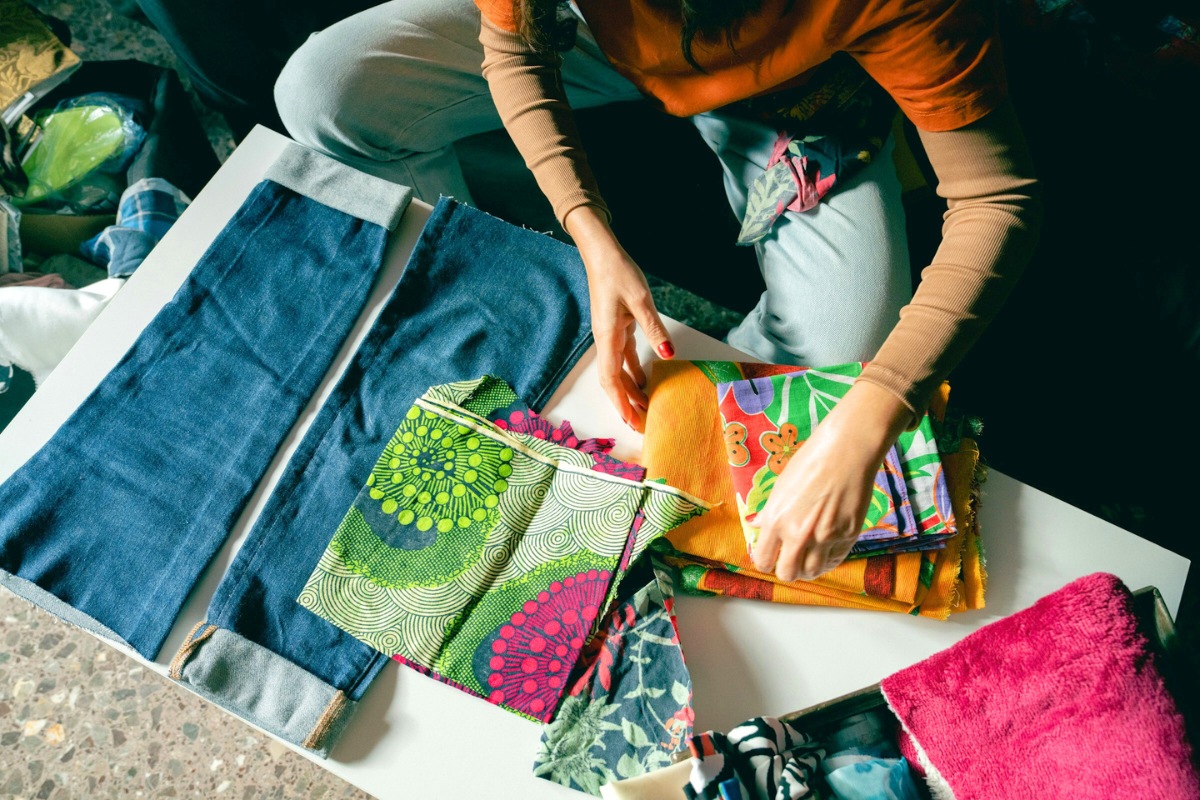
Seamless Circular Clothing Textiles Fund projects are already demonstrating innovation across clothing collection, sorting, reuse, recycling and remanufacturing. These include postal return systems for everyday clothing, workwear recovery from businesses and remote mining sites, kerbside and hub collections, and charities. The Fund pilot projects have also converted recycled textiles into valuable products like building insulation, acoustic panels and hydromulch for revegetation.
These pilots show the supply chain is engaged and ready to scale practical solutions, including small-scale regional recycling. Some have immediate application, while others need further investment to move beyond proof of concept.
The pilots show that better consumer education, skilled sorting, and effective collection systems are essential, and must work alongside existing council, retail and charity services. Together, these are the prerequisites for a scalable, coordinated national system that reflects Australia’s vast geography and diverse regional communities.
Why the Fund should be extended
Extending the Seamless Circular Clothing Textiles Fund into a second phase would directly target the additional unanticipated volumes of clothing textiles now at risk of entering landfill.
It would accelerate investment in local sorting, recycling and remanufacturing, reduce reliance on offshore reuse markets, and support place-based solutions in regional and remote areas. It would also help pilot projects transition to commercial operations and scale innovation.
As a participant in our industry consultation sessions for next markets for recycled textiles stated, “Investors are watching these trials closely. What they want to see now is policy certainty, a long-term funding horizon and clear signals that governments are committed to building a national circular textiles market, not just running short-term experiments.”
Just as importantly, extending the Fund would help accelerate the development of next markets to create a productive circular clothing economy that keeps textiles in use for longer and creates jobs in Australia.
The need for national coordination and co-investment
The current Seamless Circular Clothing Textiles Fund is part of a program which received grant funding from the Australian Government to support Australia’s transition to a circular clothing economy. However, the scale of the challenge requires co-investment from all levels of government.
With many pilots operating across different jurisdictions, a larger nationally aligned Fund would enable State Governments to pool resources, build on an effective model, and avoid fragmented efforts. Over time, it can embed circular textiles into climate, infrastructure and regional development strategies.
Policy certainty and long-term coordination are critical to unlocking private investment in recycling, logistics and innovation. Clear national signals on product stewardship for clothing, combined with a multi‑year, national Fund would give Australian recyclers, logistics providers, social enterprises and technology innovators the certainty required for continued investment in facilities, equipment and workforce capability.
A practical circular path forward
As landfill pressures and costs rise, recent disruptions to global second-hand markets have exposed the system’s fragility. While we continue to advocate for mandatory participation by all clothing brands, coordinated public investment is the most immediate way to stabilise the system and respond to current war-induced shocks.
Expanding the Seamless Circular Clothing Textiles Fund provides a practical, proven pathway for progress. It supports waste reduction, emissions targets and producer responsibility, while building on strong cross-sector collaboration.
With scalable pilots, supportive data and viable technologies, this is the moment to act - addressing immediate waste pressures while positioning Australia to capture the long-term economic and environmental benefits of a circular clothing system.

.jpg)